9/11 Skin Cancer Victim Compensation Fund Claims
Someone gets a skin cancer diagnosis years after 9/11. They assume it came from the sun, nothing more. That assumption is common and often wrong.
Skin cancer is one of the most overlooked conditions in the entire 9/11 compensation system, even though non-melanoma skin cancer is the most commonly certified cancer in the WTC Health Program.
Weisfuse & Weisfuse, LLC, helps survivors get treatment for their condition and receive compensation by filing 9/11 skin cancer claims. Our experience with these claims can save time, effort, and resources. It also allows 9/11 victims to focus on the thing that matters most: their health.
Key Takeaways: Filing A 9/11 Skin Cancer Claim
If you were diagnosed with melanoma or non-melanoma skin cancer after time in the 9/11 exposure zone, here is what matters most before you speak with a 9/11 skin cancer attorney.
- Both melanoma and non-melanoma skin cancers (including basal cell and squamous cell carcinoma) are covered as WTC Health Program conditions and are eligible for VCF compensation – non-melanoma skin cancer is the most common cancer among 9/11 responders and the third most common among survivors.
- Eligibility generally requires having lived, worked, or studied in the exposure zone between September 11, 2001 and May 30, 2002, and VCF registration must be filed within two years of your WTCHP-certified diagnosis.
- A 9/11 skin cancer claim often requires medically-supported documentation, such as impact statements, to fully value your case. Speaking with an experienced 9/11 skin cancer attorney before you file improves your chances of a smooth, successful claim.
Does Skin Cancer Qualify for 9/11 Compensation?
Skin cancer is included on the WTC Health Program’s List of WTC-Related Health Conditions. The program can certify melanoma, non-melanoma skin cancer, and certain carcinoma in situ when its certification requirements are met. That can make it easier to get certified when claiming compensation.
Federal health officials say skin cancer, prostate cancer, and breast cancer are the most common cancers certified through the program. 9/11 skin cancer is far more common among survivors and responders than most people realize. It is also far more likely to qualify for compensation than most people assume.
Why Do So Many People Overlook 9/11 Skin Cancer Claims?
Most people link skin cancer to sun exposure alone. That link is real. But it is not the whole story for people who were near Ground Zero.
The toxic dust released after the towers fell contained cadmium, a known carcinogen. Cadmium is well established as a link to 9/11-related melanoma. Government researchers have found a clear pattern in the data. The more someone was exposed to toxic dust, the higher their risk of melanoma became.
Skin cancer is common in the general population. Because of that, many people have not connected their own case back to 9/11, especially years or decades after the fact.
You Don’t Have To Face This Alone
Diagnosed With Skin Cancer After 9/11? Help Is Available.
Whether you’ve been diagnosed with melanoma, basal cell carcinoma, or squamous cell carcinoma after time spent in the 9/11 exposure zone, the September 11th Victim Compensation Fund (VCF) and the World Trade Center Health Program (WTCHP) may provide medical care and financial compensation. Weisfuse & Weisfuse, LLC offers free consultations and works on a no fee unless compensated basis, so you can focus on your health while we handle your claim.
Request A Free ConsultationWhich Skin Cancers Qualify for Compensation?
Victims can claim compensation for both major types of skin cancer:
- Non-melanoma skin cancer. This includes basal cell and squamous cell carcinoma. This is the most common form, and it usually grows slowly.
- Melanoma. This type is far less common but more dangerous. It carries the strongest documented link to 9/11 dust exposure of any branch of skin cancer.
Both melanoma and non-melanoma skin cancer are included among the WTC Health Program’s covered skin cancers, subject to the program’s certification requirements. Our lawyers help individuals confirm eligibility and meet the certification requirements to seek the support they’re eligible for.
Who Is Eligible for a 9/11 Skin Cancer Claim?
Eligibility rules cover a specific area and a set time window.
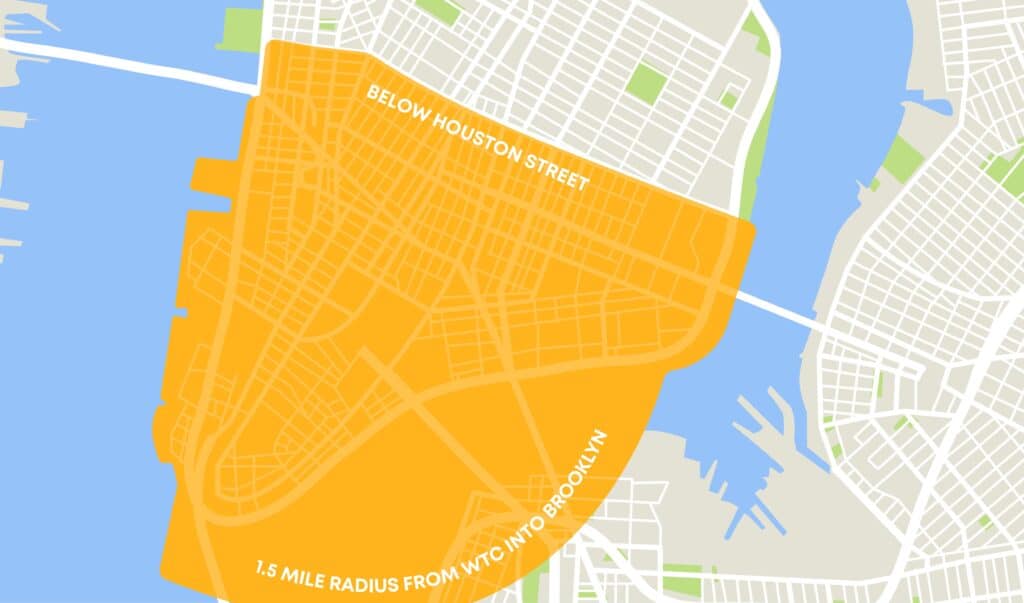
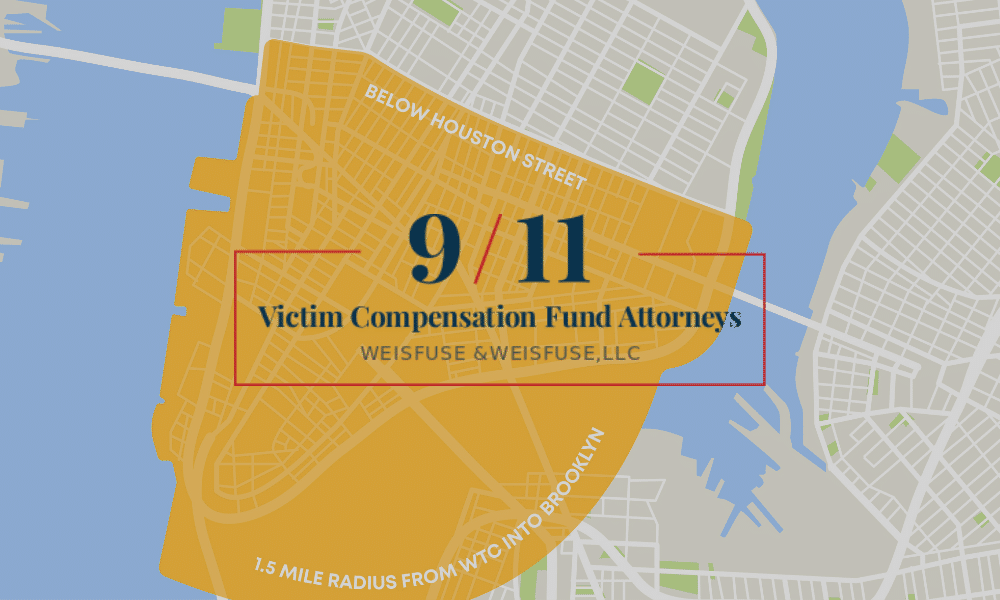
The area spans Manhattan south of Houston Street and any block in Brooklyn wholly or partially within a 1.5-mile radius of Ground Zero.
The time window broadly runs from September 11, 2001, through July 31, 2002. Anyone who lived, worked, went to school, or spent time in that area may qualify if they were present:
- For 4 days, with each day at least 4 hours, before January 10, 2002; or
- For 30 days, with each day at least 4 hours, before July 31, 2002.
This includes firefighters, police officers, and cleanup crews. It also includes office workers, students, and residents who were never part of the official response.
Where someone lives today does not matter. Someone could have left New York decades ago, moved several times since, and still qualify now. We can help with claims, regardless of where 9/11 skin cancer victims live currently.
How Do the WTC Health Program and VCF Work Together for Skin Cancer?
Getting compensation is a two-step process:
- First, you must be certified through the WTC Health Program. A doctor has to review your medical information and confirm your diagnosis, and then the program will review your exposure history and other applicable requirements.
- Once certified, the case moves to the September 11th Victim Compensation Fund. This is the program that actually pays out money, separate from the health program itself.
Free medical care and monitoring come through the WTC Health Program. This is separate from any financial award someone might later receive. Eligible victims can get free treatment for skin cancer even while a compensation claim is still in progress or under review.
What Compensation Is Available for Cancer Claims?
Two categories of compensation generally apply:
- Economic loss covers real financial costs. This includes lost income, lost benefits, and out-of-pocket medical costs tied to treatment.
- Noneconomic loss covers pain, suffering, and related harm. No lost income is necessary to qualify for these losses.
For cancer claims in general, a $250,000 cap applies to noneconomic losses. The exact amount depends on how serious the case is.
Compensation also depends on whether the cancer has spread to other parts of the body. A case involving scarring, a recurrence of the cancer, or related conditions can also affect the final number. The impact can sometimes be significant.
Our lawyers can help 9/11 survivors recover full compensation by filing a claim with a complete set of supporting documents.
No Cost To You Unless We Win
Let Us Handle The Complexity Of Your Skin Cancer Claim
Between WTC Health Program certification, VCF paperwork, and medically-supported impact statements, a 9/11 skin cancer claim involves a lot of moving pieces on top of a difficult diagnosis. Our team manages every step so you don’t have to. Consultations are always free, and you owe Weisfuse & Weisfuse, LLC nothing unless your claim is successful.
Request A Free ConsultationWhat Documentation Helps a Skin Cancer Claim?
When filing your claim, we will need to gather the following documentation:
- Medical records showing the diagnosis and treatment history;
- Pathology reports from any biopsy confirming the exact type of skin cancer involved;
- Proof of presence in the exposure zone, such as old pay stubs, school records, lease agreements, or utility bills tied to an address in the area; and
- Sworn statements (affidavits) from coworkers, neighbors, or family members.
The sworn statements can help fill in gaps when other paperwork was never kept or has since been lost.
9/11 Skin Cancer Claim Questions
Answers to common questions about filing a 9/11 skin cancer claim with the VCF and WTC Health Program.
Both melanoma and non-melanoma skin cancer, including basal cell carcinoma and squamous cell carcinoma, qualify for VCF compensation. The WTC Health Program covers all malignant skin cancers as 9/11-related conditions, and non-melanoma skin cancer is among the most common cancers diagnosed in 9/11 responders and survivors.
You may be eligible if you lived, worked, or studied in the New York City exposure zone between September 11, 2001 and May 30, 2002, and were later diagnosed with melanoma or non-melanoma skin cancer. Responders, survivors, and downtown residents can all qualify for VCF and WTCHP benefits.
Yes. VCF registration must be filed within two years of your WTC Health Program-certified skin cancer diagnosis, though WTCHP enrollment itself has no deadline. Filing early helps preserve your options, since documentation and certification can take time to complete before the VCF clock starts running.
A 9/11 skin cancer attorney helps document your exposure history, secure WTCHP certification, and prepare medically-supported impact statements that can maximize your compensation. Because VCF claims involve strict documentation requirements, working with an experienced attorney reduces the risk of delays or denial.
Yes. If a person died from a skin cancer tied to 9/11, a family member or the person handling their estate may file a claim on their behalf. This applies even if that person never filed a claim while they were still alive.
Get In Contact Today
If you are a current client, please email Jason at jw@weisfuse.com with your questions. All information provided is safe & confidential.
No phone/mobile number information will be shared with third parties/affiliates for marketing/promotional purposes. All the above categories exclude text messaging originator opt-in data and consent; this information will not be shared with any third parties.