For responders who suffered from a 9/11-related cancer or other serious health condition after involvement in the recovery or cleanup effort, the Bill Ricci Act is a welcome piece of legislation that can help recover disability retirement benefits.
Before 2019, many responders exposed to the toxic cocktail at Ground Zero or nearby, and who became temporarily or permanently disabled afterward, were unable to claim Accidental Disability Retirement (ADR) because their condition was not considered the result of a single accident. They had to settle for Ordinary Disability Retirement benefits, which are substantially less.
The enactment of the Bill Ricci World Trade Center Rescue, Recovery, and Cleanup Operations Act (its full name) amended the legislation to remove that barrier to claiming this key financial support.
Here’s what else disabled 9/11 responders need to know about the Bill Ricci Act.
What is the Bill Ricci Act?
The Bill Ricci Act was named after a Lieutenant in the Clifton Fire Department in New Jersey.
Bill Ricci responded to Ground Zero as a volunteer. Like many responders, Bill became ill due to prolonged and cumulative exposure to the toxic dust and chemicals over days or weeks. This didn’t fit the legal definition of a single “accident,” typically used for ADR claims.
The Bill Ricci Act effectively changed the legal definition of a single identifiable on-the-job accident for these responders. It allows toxic exposure during the rescue and cleanup efforts to be legally treated as an accident, making responders eligible for ADR instead of the lower-paying Ordinary Disability Retirement (ODR).
Following the passing of the Act, Bill Ricci and his co-responders were able to claim Accidental Disability Retirement benefits, the same as anyone else permanently disabled by a workplace accident. These responders can now secure the disability benefits required to support themselves and their families.
Who qualifies for ADR under the Bill Ricci Act?
The ADR benefits are available to members of the New Jersey pension systems, regardless of whether they were enrolled at the time of participation in the rescue, recovery, or cleanup.
These include:
- Active members of the Police and Firemen’s Retirement System (PFRS).
- Active members of the State Police Retirement System (SPRS).
- Certain members of the Public Employees’ Retirement System (PERS), such as EMTs and Law Enforcement Officers.
To be eligible for benefits, the members must show:
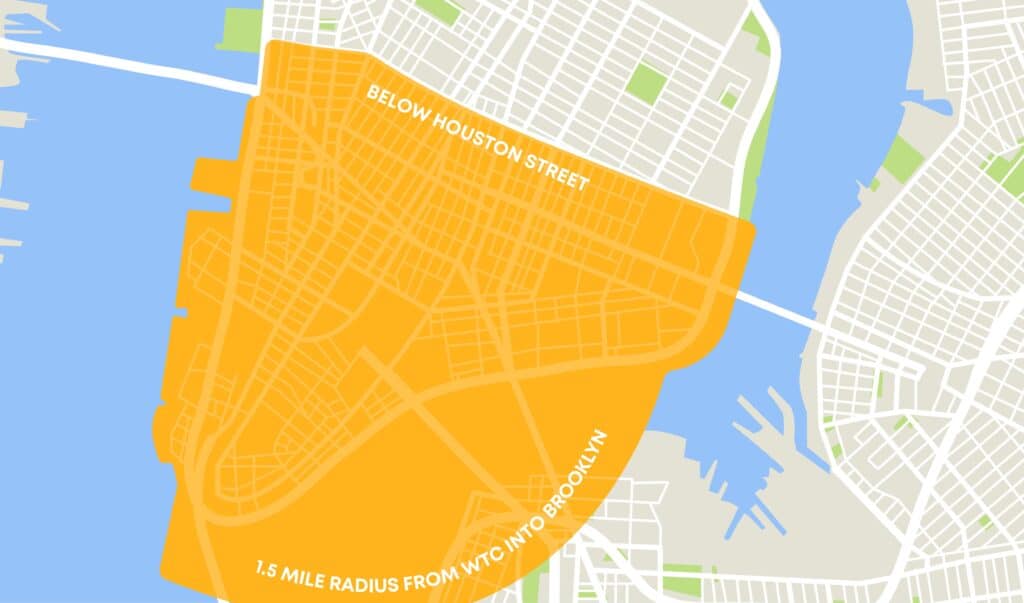
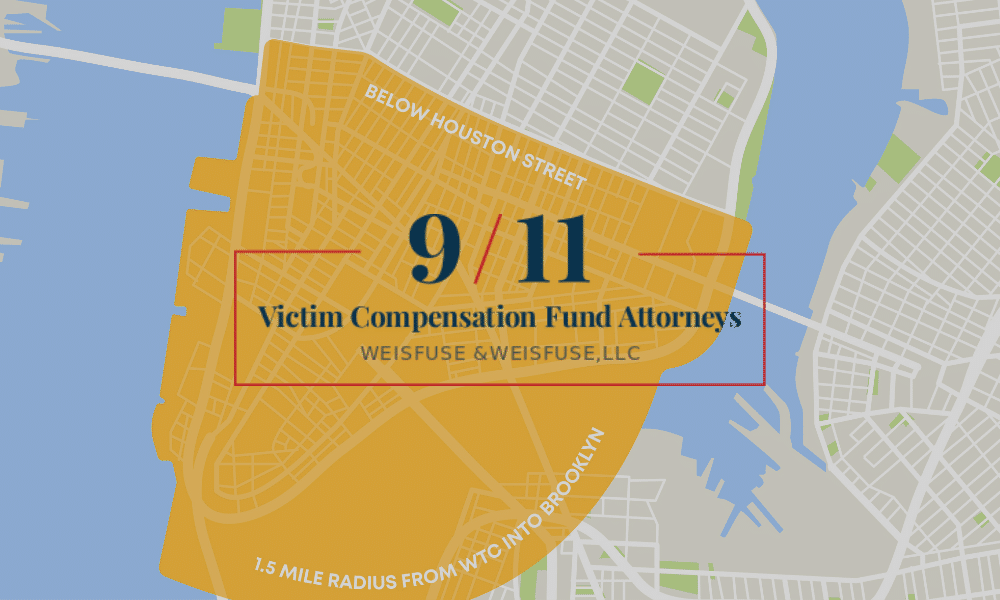
- Participation in the WTC rescue, recovery, or cleanup operations between September 11 and October 11, 2001, in the area of lower Manhattan south of Houston Street, the Staten Island Landfill, or the NYC Medical Examiner’s Office.
- A disabling condition, such as cancer, aerodigestive disorders, or mental health conditions linked to 9/11 exposure.
- The permanency of the condition and how it prevents the member from safely performing their job.
Certified conditions recognized by the World Trade Center Health Program (WTCHP) as 9/11-related include over 70 types of cancer and a wide range of aerodigestive disorders and mental health problems.
Ordinary Disability Retirement vs. Accidental Disability Retirement
The primary distinction between Ordinary and Accidental retirement lies in the cause of the disability and the resulting financial compensation.
Accidental retirement recognizes that the disability was caused by a workplace accident, and therefore provides significantly higher payouts.
| Feature | Ordinary Disability Retirement (ODR) | Accidental Disability Retirement (ADR) |
|---|---|---|
| Eligibility Criteria | Disabling conditions not caused by a work accident. | Disability resulting from a work accident (includes 9/11 exposure under the Ricci Act). |
| Typical Payout | 33.3% to 50% (one-third to one-half) of the final average salary. Typically, 40% to 45%. | Up to 72.7% of the final average salary in NYC or 66.6% in New Jersey. |
| Tax Status | Often taxable until retirement age is reached. | Often tax-free. |
| Financial Impact | Standard baseline support. | Provides significantly greater long-term security; often life-changing. |
The Ricci Act specifically ensures that certain long-term health exposures are classified under the “accidental” umbrella, allowing responders to access the higher tier of benefits.
Qualifying for ADR also creates a legal presumption that certain conditions (like cancers or respiratory illnesses) are work-related if the responder served at the WTC sites.
How did responders benefit from the 2025 amendment to the Bill Ricci Act?
The original Ricci Act dates to 2019 but an important amendment was made in July 2025.
Under the previous legislation, if members or retirees missed the strict two-year registration deadline that passed on August 7, 2021, they waived their right to ADR benefits. Many responders were denied benefits simply because they didn’t know they had to register by that date.
Under the new regulations, any eligible members or retirees who missed the previous deadline can now reapply or petition for reconsideration by filing a request for amended benefits.
The application must be made within 180 days of knowledge of a disability and its relation to the rescue, recovery, and cleanup operations. The 180-day deadline starts from the date that the WTC Health Program certified a condition as 9/11-related and eligible for treatment and benefits.
How to claim Accidental Disability Retirement under the Bill Ricci Act?
To apply for disability retirement, responders should:
- Enroll in the WTC Health Program for certification of their 9/11-related condition.
- Collect evidence of their presence at the WTC rescue, recovery, or cleanup sites.
- File an application for ADR with their pension system.
- Undergo a medical evaluation by the pension system’s medical board.
- Provide supporting documentation, including WTC Health Program certifications and medical records.
- File a request for benefits within 180 days from the date the WTC Health Program certified an illness as 9/11-related.
Responders may face challenges in proving their presence at a WTC site almost 25 years ago. Pension boards may also dispute the status of their disability. The application process is made considerably easier with the assistance of a seasoned 9/11 victims’ attorney.
To discuss your situation and learn more about how we may be able to help you, please call Weisfuse & Weisfuse, LLC at 212-983-3000 or contact us online to schedule a free consultation.
About Jason Weisfuse –
9/11 Victim Compensation Fund Attorney
About Jason Weisfuse –
9/11 Victim Compensation Fund Attorney
Jason E. Weisfuse is a seasoned 9/11 Victim Compensation Fund attorney and owner of Weisfuse & Weisfuse, LLC, a New York City-based law firm dedicated to representing individuals affected by the September 11th attacks. Since the establishment of the September 11th Victim Compensation Fund (VCF), Jason has been instrumental in assisting first responders, survivors, and families in securing the compensation and medical benefits they deserve. He will personally be submitting your claim and will be your primary contact throughout the process.
As a graduate of New York Law School (2009), Jason brings extensive experience regarding the 9/11 Victim Compensation Fund to his practice. His deep understanding of the VCF and the World Trade Center Health Program (WTCHP) has enabled him to navigate complex claims processes effectively, resulting in substantial awards for his clients.
Jason is a member of the New York State Trial Lawyers Association and the American Association for Justice and has been published in the New York Law Journal.
Get In Contact Today
If you are a current client, please email Jason at jw@weisfuse.com with your questions. All information provided is safe & confidential.
No phone/mobile number information will be shared with third parties/affiliates for marketing/promotional purposes. All the above categories exclude text messaging originator opt-in data and consent; this information will not be shared with any third parties.