
How Can the Spouse or Children File a 9/11 VCF Claim on Behalf of a Family Member?
Despite almost a quarter of a decade passing since the 9/11 attacks, families are still suffering the devastating health effects.
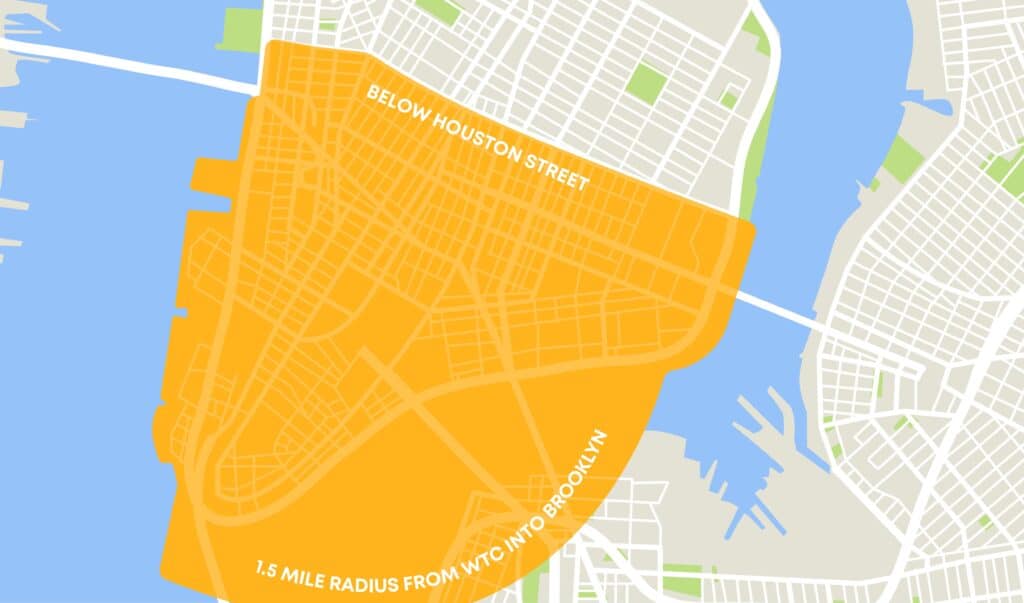
Over 70 types of cancer have been linked to the toxic dust cloud that hung over Lower Manhattan after the attacks, inhaled by responders and survivors with long-term debilitating consequences.
Anyone present in the exposure zone at that time and negatively impacted by the toxicity can seek help from federal programs offering free healthcare and monitoring (WTC Health Program), plus the Victim Compensation Fund (VCF). However, gathering and filing the necessary paperwork can be challenging for those suffering a serious 9/11-related condition.
Fortunately, spouses or children can file a 9/11 VCF claim on behalf of family members who are unable to manage the application themselves or as personal representatives of the estates of deceased survivors or responders.
Here is how.
When can a 9/11 VCF claim be filed for a family member?
Since the September 11th Victim Compensation Fund (VCF) reopened in 2011, more than $16.8 billion has been awarded to over 71,000 claimants.
In 2025 alone, the VCF awarded nearly $2 billion and issued over 9,800 award determinations.
Normally, claims are made directly by survivors or responders, with or without the help of 9/11 claims lawyers. However, the claim can be made by a family member if the victim is:
- Already deceased from a 9/11-related condition (deceased claims).
- Incapacitated or too sick to complete the paperwork.
VCF claims can be complex enough when proving presence in the exposure zone during the eligible dates. However, claims by family members involve two challenging processes: first, probate or an application for guardianship/conservatorship must be secured (to prove their legal authority to claim on behalf of the family member), and then, the VCF claims process.
Who is eligible to file a 9/11 VCF claim on behalf of a family member?
Under VCF rules, only certain family members of the survivor or responder will have the authority to sign documents, submit medical and financial documentation, receive communication from the Special Master of the fund, and distribute the funds awarded.
The following representatives are eligible:
- A spouse.
- An adult child.
- A court-appointed executor or administrator.
- A legal guardian (for incapacitated survivors).
Under state law, in deceased claims, if there is a will, the named executor of the estate of the deceased can act for the deceased. The VCF, therefore, allows this person to file a claim.
If there is no will, the state surrogate court will appoint an administrator. This is often the spouse or another close family member of the deceased (such as an adult child, if there is no surviving spouse), who then acts as the VCF personal representative.
Co-administrators may also be appointed by courts, with one administrator acting as the personal representative for the VCF claim.
What proves legal authority to act for the claimant with the VCF?
Personal representatives will need to prove that they have the authority to act on behalf of the claimant before the VCF will progress the claim.
Usually, this involves:
- For deceased claims: Either “Letters Testamentary” (if the deceased left a will) or “Letters of Administration” (if they did not leave a will), provided by the appropriate probate court.
- For incapacitated victims: A court order appointing the individual as the guardian, conservator, or legal representative of the loved one.
What other documents are required when filing a family member’s 9/11 VCF claim?
Personal representatives of deceased or incapacitated claimants should follow this process:
- Register with the VCF before the deadline: The deadline depends on the specific health condition of the claimant and when it was certified by the WTCHP. Most claimants can be registered online immediately, even if they’re not sick. Those with conditions already diagnosed by WTCHP must be registered within two years of the formal diagnosis, while personal representatives for deceased claims generally have two years from the date of death to register.
- Establish legal authority: Submit probate documents (letters testamentary or administration) or guardianship/conservator documentation.
- Prove a 9/11-realted medical condition: Collect medical evidence, such as certification from the WTC Health Program or a certified private physician.
- Prove exposure: Collect evidence to prove that your loved one was in the NYC Exposure Zone during the eligible dates (September 11, 2001, to May 30, 2002).
- Prove financial losses: Collect evidence of previous earnings, benefits, pension information, etc., to support a potential economic loss claim for the incapacitated or deceased individual.
- Submit the forms and supporting evidence: The VCF claim form can be completed and signed online, with the relevant support documents uploaded.
As the personal representative of the deceased or incapacitated individual, this completes the application unless the VCF Special Master reviews the documentation and requests further information.
After this, an award determination will be made. In wrongful death cases, the award goes to the estate of the deceased person.
The personal representative must then distribute the award to the heirs, and the VCF may request a distribution plan to ensure the right heirs (spouses, children, etc.) are protected. Conflicts between surviving family members can complicate this process.
What if your family member already filed a 9/11 claim?
If your family member already filed a VCF claim, what happens next depends on the status of that claim:
- If the VCF claim was still being processed when your loved one passed away, the personal representative can complete the claim, with additional wrongful death compensation possible.
- If the victim already received a personal injury award but has since passed away, a separate wrongful death claim may be filed by the family for additional pain and suffering and economic loss related to the death.
How does the 9/11 VCF calculate compensation for a loved one?
The VCF considers two types of losses incurred by victims of the 9/11 attacks:
- Economic losses for:
- Lost earnings and pension benefits.
- Burial/funeral expenses.
- Loss of household services.
- Future financial support that would have been provided.
- Non-economic losses, including:
- Pain and suffering related to the condition.
- Additional loss related to the death.
Non-economic losses for cancers are typically capped at $250,000. Dependent spouses and children receive an extra $100,000 each.
Our 9/11 attorneys can help file a family member’s VCF claim
As experienced 9/11 claims attorneys, we can help the families of victims prove their legal authority to act on behalf of a deceased or incapacitated loved one, and to claim maximum compensation with the VCF without unnecessary delays.
To discuss your situation and learn more about how we may be able to help you, please call Weisfuse & Weisfuse, LLC at 212-983-3000 or contact us online to schedule a free consultation.
About Jason Weisfuse –
9/11 Victim Compensation Fund Attorney
About Jason Weisfuse –
9/11 Victim Compensation Fund Attorney
Jason E. Weisfuse is a seasoned 9/11 Victim Compensation Fund attorney and owner of Weisfuse & Weisfuse, LLC, a New York City-based law firm dedicated to representing individuals affected by the September 11th attacks. Since the establishment of the September 11th Victim Compensation Fund (VCF), Jason has been instrumental in assisting first responders, survivors, and families in securing the compensation and medical benefits they deserve. He will personally be submitting your claim and will be your primary contact throughout the process.
As a graduate of New York Law School (2009), Jason brings extensive experience regarding the 9/11 Victim Compensation Fund to his practice. His deep understanding of the VCF and the World Trade Center Health Program (WTCHP) has enabled him to navigate complex claims processes effectively, resulting in substantial awards for his clients.
Jason is a member of the New York State Trial Lawyers Association and the American Association for Justice and has been published in the New York Law Journal.
Get In Contact Today
If you are a current client, please email Jason at jw@weisfuse.com with your questions. All information provided is safe & confidential.
No phone/mobile number information will be shared with third parties/affiliates for marketing/promotional purposes. All the above categories exclude text messaging originator opt-in data and consent; this information will not be shared with any third parties.