
The September 11th Victim Compensation Fund (VCF), in its present form, is a different incarnation of the original fund, which was set up in 2001 to provide immediate financial assistance for economic losses to the victims of the 9/11 attacks.
The original VCF was funded by the Air Transportation Safety and System Stabilization Act. This could access $7.4 billion to provide compensation to individuals and families who had suffered physical harm or lost loved ones from the attacks.
After fending off some legal challenges from insurance companies and other entities, it started accepting claims in August 2002, paying out compensation for economic losses, such as lost wages and benefits, medical expenses, etc.
It soon became evident that this initial version of the 9/11 Victim Compensation Fund was inadequate for meeting the growing health needs of responders and survivors of the attacks.
The James Zadroga 9/11 Health and Compensation Act
After considerable efforts by responders, survivors, and their legal and labor representatives, Congress passed the James Zadroga 9/11 Health and Compensation Act in 2010.
This legislation reopened the VCF with additional funding for compensation and medical treatment for 9/11-related illnesses, recognizing the many adverse health effects caused by exposure to the toxic dust cloud that hung over Lower Manhattan in the aftermath of the attacks.
Accordingly, the reopened fund became eligible to any individuals who were present in the exposure zone of the dust cloud between September 11th, 2001 and May 30th, 2002.
The same legislation established the World Trade Center Health Program (WTCHP), which provides medical treatment and monitoring for individuals with 9/11-related health conditions.
Since the legislation was passed, two other major events have ensured the long-term future of the fund for providing financial assistance to 9/11 victims:
- In 2015, Congress passed the James Zadroga 9/11 Health and Compensation Reauthorization Act. This extended the VCF through 2020, provided additional funding for compensation and medical treatment, and greatly expanded the list of eligible health conditions.
- In July 2019, Congress passed the Never Forget the Heroes legislation after the VCF announced that it was running out of funding and would need to cut compensation payments to some claimants unless additional funding was provided. This extended the VCF through 2090 and provided additional funding to ensure that all eligible future claimants could receive full compensation for the rest of their lives.
The September 11th Victim Compensation Fund claims process
The 9/11 Victim Compensation Fund is overseen and administered by a Special Master appointed by the Attorney General of the United States. There have been four Special Masters since 2001, the most recent of whom is Allison Turkel (appointed in 2023).
All VCF claims and compensation awards pass through the Special Master’s office.
Submitting a claim can take time. Victims must be patient and go through the following steps:
- Determine eligibility to file a claim: Eligibility is usually established by proving physical harm or illness connected to one’s presence at the World Trade Center area between September 11, 2001, and May 30, 2002, or presence at the Pentagon or Shanksville, PA, crash site, or involvement in the cleanup and recovery efforts.
- File the claim: Victims or their representatives can file a claim online or by mail, including detailed information about their activities in the exposure zone, their financial losses as a result, and the related injury or illness. Supporting documentation, such as medical records, employment records, tax returns, etc., must be provided.
- Initial VCF review: The VCF will conduct an initial review of the claim and may request additional information or documentation before a decision is made on whether to approve it (this usually takes several months).
- Determining compensation: Approved claims will be assessed for compensation payable to the claimant. This usually depends on the severity of the illness, the financial losses suffered, and other impacts on the lives of individuals or their families.
- Appealing a decision: Victims can appeal the decision to deny a claim. Often, further evidence may be required to support the claim or a formal appeal can be filed with the VCF.
The claims process is easier to navigate with the help of an experienced 9/11 victim’s compensation attorney. A lawyer can often reduce delays and maximize compensation more effectively than claimants who are unfamiliar with the system.
Determining Victim Compensation Fund eligibility
The first step in filing a VCF claim is determining eligibility. The following individuals are normally eligible for compensation if they have suffered from any medical condition with a known link to 9/11:
- Any person present at the World Trade Center, Pentagon, or Shanksville, PA, crash sites on 9/11.
- First responders, including firefighters, police officers, and emergency medical technicians, who participated in the rescue and recovery efforts at the crash sites.
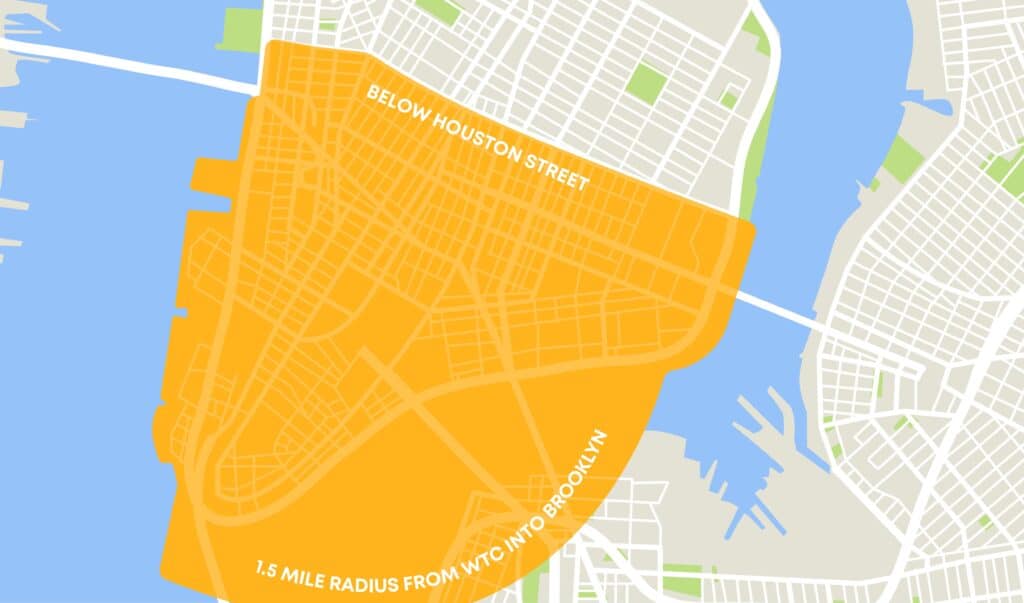
- Individuals who lived, worked, or attended school in lower Manhattan south of Canal Street between September 11th, 2001, and May 30th, 2002.
- Any person who participated in the debris removal efforts at the crash sites or the Fresh Kills landfill in Staten Island, New York.
- Any person present around the Pentagon crash site between September 11th and October 11th, 2001.
Presence at an approved 9/11 location
Proving one’s presence at a 9/11 site, including the crash sites and an extended area of Lower Manhattan, can be challenging. This is especially the case if an illness has shown symptoms only recently (like many slow-growing cancers) and the victim possesses little or no documentation from over 20 years ago.
A 9/11 attorney can help victims locate employment records, collect affidavits from witnesses, and compile other documentation proving their presence to bolster VCF claims.
The “exposure zone”
The “exposure zone” around Ground Zero refers to the area of Lower Manhattan south of Canal Street where survivors and responders may have been exposed to toxins after the 9/11 attacks.
These toxins are known to be hazardous to human health, often leading to cancer, respiratory conditions, and other illnesses. The main toxins include:
- Asbestos
- Lead and other heavy metals
- Benzene
Other volatile organic compounds
Eligible conditions and WTCHP treatment/certification
To be eligible for compensation from the 9/11 Victim Compensation Fund, the claimant must suffer from a health condition recognized by the VCF and included on the list of conditions connected to the attacks.
The list includes over 70 types of cancer, including mesothelioma and lung cancer, as well as multiple respiratory conditions and other gastrointestinal conditions (“aerodigestive disorders” such as chronic cough syndrome, asthma, and chronic obstructive pulmonary disease).
To discuss your situation and learn more about how we may be able to help you, please call Weisfuse & Weisfuse, LLC at 212-983-3000 or contact us online to schedule a free consultation.
About Jason Weisfuse –
9/11 Victim Compensation Fund Attorney
About Jason Weisfuse –
9/11 Victim Compensation Fund Attorney
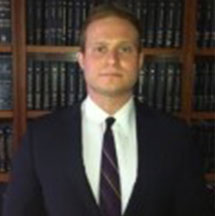
Jason E. Weisfuse is a seasoned 9/11 cancer attorney and managing partner at Weisfuse & Weisfuse, LLC, a New York City-based law firm dedicated to representing individuals affected by the September 11th attacks. Since the establishment of the September 11th Victim Compensation Fund (VCF), Jason has been instrumental in assisting first responders, survivors, and families in securing the compensation and medical benefits they deserve.
With a Juris Doctor from New York Law School (2009), Jason brings extensive experience regarding the 9/11 Victim Compensation Fund to his practice. His deep understanding of the VCF and the World Trade Center Health Program (WTCHP) has enabled him to navigate complex claims processes effectively, resulting in substantial awards for his clients.
Jason’s commitment to the victims in the 9/11 community is evident through his active involvement in professional organizations such as the New York State Trial Lawyers Association and the American Association for Justice. He has also contributed to legal discourse with publications in the New York Law Journal, reflecting his dedication to legal excellence and advocacy.
At Weisfuse & Weisfuse, LLC, Jason continues to provide compassionate and knowledgeable representation, ensuring that those affected by 9/11 receive the support and compensation they are entitled to.
Get In Contact Today
If you are a current client, please email Jason at jw@weisfuse.com with your questions. All information provided is safe & confidential.
No phone/mobile number information will be shared with third parties/affiliates for marketing/promotional purposes. All the above categories exclude text messaging originator opt-in data and consent; this information will not be shared with any third parties.