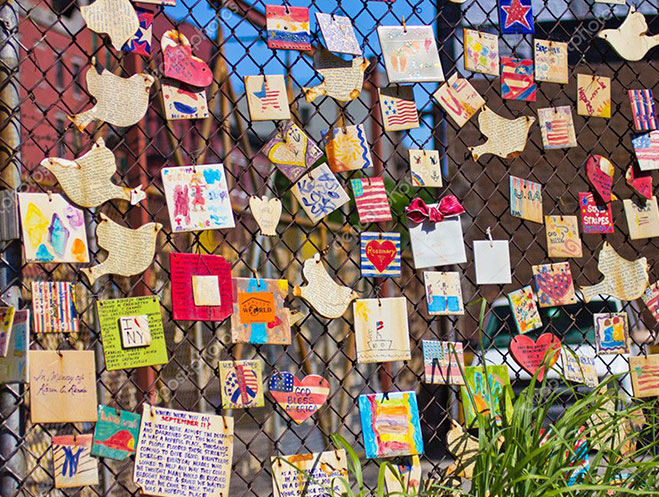

Survivors and responders who develop health conditions related to exposure to the toxic dust cloud that hung over Lower Manhattan after the 9/11 attacks can receive compensation through the September 11th Victim Compensation Fund (VCF).
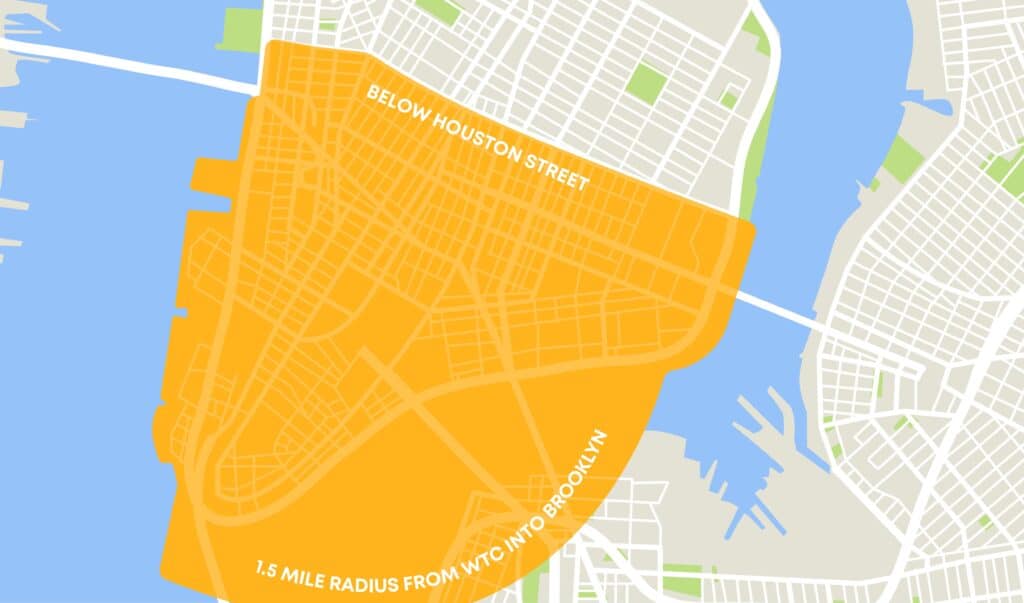
To do so, victims must provide proof of presence in the New York City exposure zone between September 11, 2001, and May 30, 2002. This is often achieved using proof of presence statements and supporting evidence.
Even individuals who were not directly involved in the rescue, debris removal, or cleanup efforts —but who were simply returning to live, work or study in the area between the eligible dates —may have the right to compensation if their health condition is 9/11-certified. This includes many cancer types, aerodigestive disorders, mental health conditions, and more.
Why do you need to prove presence in VCF claims?
The VCF is administered by the U.S. Department of Justice (DOJ). The Special Master of the fund is appointed by the Attorney General to oversee the fund’s operations. As such, there are strict regulations and a somewhat “high bar” set for evidence, ensuring that the funds end up with those they are intended for.
One of the most basic requirements is to prove presence in the exposure zone between the eligible dates. This confirms that the health condition claimed is related to the 9/11 attacks and the toxic dust cloud.
If presence is proven and the condition is a certified 9/11-related health condition as recognized by the World Trade Center Health Program (WTCHP), compensation should be available.
However, in the intervening years since the attacks, reliable evidence to prove presence is not always straightforward. Primary supporting documentation, like pay stubs, official rosters, utility bills, mortgage statements, rental agreements, and school transcripts, may have been misplaced. Claims often hinge on secondary proof of presence documentation, such as witness statements or photos.
What is a VCF Victim Presence Statement?
Everyone who files a VCF compensation claim requires a 9/11 Victim Presence Statement. This is a written declaration signed and dated by the claimant affirming their presence in the exposure zone. The statement should include the following details:
- Dates and duration of presence.
- Precise location(s) of presence in the exposure zone.
- Purpose of presence: work, volunteering, residence, school attendance, etc.
Proof of presence statements must usually be accompanied by an additional primary form of evidence to support the claim or at least one other secondary form of evidence, such as a Witness Presence Statement.
What is a VCF Witness Presence Statement?
A VCF Witness Presence Statement is a sworn statement (affidavit) from another individual who can verify first-hand that the claimant was present in the exposure zone during the dates stated.
This statement could be from a co-worker, employer, friend, neighbor, or anyone else who can verify the claimant’s presence, and should include the following information:
- The witness’s full name and contact information.
- Details of how the witness knows the claimant.
- Specific details of the time, date, and location of the claimant’s presence.
- The statement should be signed and dated by the witness under penalty of perjury.
When are proof of presence statements submitted?
Victim’s proof of presence statements are required when the VCF compensation claim is initially submitted—either online or via mail. For claimants who work with an attorney, all necessary paperwork will be prepared and any other documentary requirements identified before applying.
Working with an attorney can prevent common mistakes, such as date errors, omissions, imprecise locations, repetition or duplication of information, or unsigned/undated statements.
Witness presence statements are usually required if there are no official records of presence or other primary documents that definitively prove presence, such as pay stubs, utility bills, attendance records from school, government documents like tax records or DMV files, etc.
For volunteers, undocumented workers, and many other claimants who were in the exposure zone but cannot definitively prove it, a witness statement can be an especially valuable piece of supporting evidence.
If definitive proof of presence evidence is not submitted with the initial claim, the VCF may request additional information, at which time additional documents can be forwarded.
What documents and information are needed to get certified with the WTCHP?
For many people who intend to file a VCF claim, the first step is certification with the World Trade Center Health Program (WTCHP).
To apply, you’ll need to present documentation that establishes your identity, proves your presence in the exposure zone, and confirms your medical condition. Much of the documentation necessary for the VCF compensation claim, therefore, may have already been compiled.
Documentation requirements for the WTCHP include:
- Personal identification documents: e.g., government-issued photo ID (driver’s license or passport) or a Social Security number.
- Proof of exposure: documents that prove presence in the NYC exposure zone or at the Pentagon or Shanksville, PA, crash sites between September 11, 2001, and July 31, 2002 (note the slightly different eligibility dates compared with the VCF).
- Medical documentation: diagnosis of a 9/11-related health condition (if already known), including the date of diagnosis and the name/contact info of the diagnosing physician or facility.
- Supporting documentation: responders and survivors require different supporting documentation based on their reasons for presence in the exposure zone during the eligible dates.
- Application forms: an official WTCHP application must be filled out, signed, and submitted.
Despite the different application forms and processes to go through, the information gathered for WTCHP certification can be reused for the VCF claim.
It is worth noting that the VCF relies on the WTCHP to determine whether a person’s condition is 9/11-related. Therefore, once someone has a WTCHP-certified condition, they don’t need to resubmit the same medical evidence to the VCF.
Minimum hours required in the exposure zone
To become certified with the WTCHP for free medical care and subsequently claim compensation from the VCF, responders must have spent the following minimum periods in the exposure zone:
- At least 4 hours on 9/11 itself (Sept 11, 2001), or
- At least 24 hours of work between Sept 11 and Sept 14, 2001, or
- At least 80 hours of work between Sept 11, 2001, and July 31, 2002
Survivors must have spent the following minimum periods in the exposure zone:
- A minimum of 4 hours on 9/11, or
- 24 hours during the period Sept 11–Sept 14, 2001, or
- 80 hours anytime between Sept 11, 2001, and May 30, 2002.
Proof of presence is central to any claim with the VCF. However, proof often requires professional legal assistance to avoid delays, particularly for survivors who have moved away from NYC and cannot locate primary supporting documentation.
To discuss your situation and learn more about how we may be able to help you, please call Weisfuse & Weisfuse, LLC at 212-983-3000 or contact us online to schedule a free consultation.
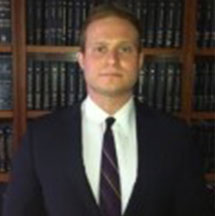
About Jason Weisfuse –
9/11 Victim Compensation Fund Attorney
About Jason Weisfuse –
9/11 Victim Compensation Fund Attorney
Jason E. Weisfuse is a seasoned 9/11 cancer attorney and managing partner at Weisfuse & Weisfuse, LLC, a New York City-based law firm dedicated to representing individuals affected by the September 11th attacks. Since the establishment of the September 11th Victim Compensation Fund (VCF), Jason has been instrumental in assisting first responders, survivors, and families in securing the compensation and medical benefits they deserve.
With a Juris Doctor from New York Law School (2009), Jason brings extensive experience regarding the 9/11 Victim Compensation Fund to his practice. His deep understanding of the VCF and the World Trade Center Health Program (WTCHP) has enabled him to navigate complex claims processes effectively, resulting in substantial awards for his clients.
Jason’s commitment to the victims in the 9/11 community is evident through his active involvement in professional organizations such as the New York State Trial Lawyers Association and the American Association for Justice. He has also contributed to legal discourse with publications in the New York Law Journal, reflecting his dedication to legal excellence and advocacy.
At Weisfuse & Weisfuse, LLC, Jason continues to provide compassionate and knowledgeable representation, ensuring that those affected by 9/11 receive the support and compensation they are entitled to.
Get In Contact Today
If you are a current client, please email Jason at jw@weisfuse.com with your questions. All information provided is safe & confidential.
No phone/mobile number information will be shared with third parties/affiliates for marketing/promotional purposes. All the above categories exclude text messaging originator opt-in data and consent; this information will not be shared with any third parties.