
Since the 9/11 attacks, many thousands of New York workers have had their lives heavily impacted by adverse health conditions arising from exposure to the toxic dust cloud.
Many conditions are only coming to light decades after the attacks, because of the long latency periods of certain types of cancer and respiratory issues.
Federal programs like the World Trade Center Health Program (WTCHP) and September 11th Victim Compensation Fund (VCF) provide free health care and compensation for losses, including pain and suffering.
Victims may also be entitled to 9/11 New York State Workers’ Compensation Board benefits (NYS Workers’ Comp) but an important September 2026 deadline is looming for potential claimants.
Let’s take a closer look at the similarities and differences between the compensation types and the essential deadline to be aware of.
NYS Workers’ Comp vs. VCF compensation: What’s the difference?
Both the VCF and the 9/11 NYS Workers’ Comp program were created to support those affected by the toxic aftermath of 9/11. However, the focuses of the programs are different, and they operate independently of each other:
- The 9/11 Victim Compensation Fund is a federal program created by the Zadroga Act, designed to provide financial relief to responders, office workers, residents, and students who were present in the Lower Manhattan Exposure Zone.
- The New York State Workers’ Compensation Board is a state-level insurance system, specifically covering individuals who were “on the clock” or acting as formal volunteers during the rescue, recovery, and debris removal operations. This state program follows specific New York labor laws that differ significantly from federal VCF regulations.
Benefits offered by the programs
- NYS Workers’ Comp provides coverage for lost wages (two-thirds of the average weekly wage) and medical coverage for life for NYC workers affected by 9/11.
- The VCF provides coverage for pain and suffering (non-economic) and economic losses not covered elsewhere, and is available to residents and students, as well as responders and other workers.
Here’s a summary of the types of benefits offered by the state and federal programs, highlighting the different focuses of the two programs:
| Benefit Type | NYS Workers’ Comp Benefits | VCF Benefits |
|---|---|---|
| Primary Focus | Economic stability: Provides roughly 2/3 of your average weekly wage if you are disabled. | Holistic recovery: Provides a lump-sum payment for the overall impact on your life. |
| Medical Coverage | Provides lifetime medical coverage for the specific 9/11-related injury or illness. | Does not provide direct treatment (this is handled by the WTC Health Program). |
| Pain and Suffering | None. State Workers’ Comp does not pay for emotional distress or physical pain. | Yes. Provides non-economic loss awards for pain, suffering, and loss of enjoyment of life. |
| Death Benefits | Provides weekly survivor benefits to spouses and minor children. | Provides a specialized Wrongful Death award for families of the deceased. |
Can workers file for both NYSWC and VCF benefits?
Workers and formal volunteers who worked at the scene during the rescue, recovery, and debris removal operations can claim both NYS Workers’ Comp benefits and VCF benefits if they suffered an injury or an adverse health condition related to that work.
This applies to responders like police officers and firefighters, but also to sanitation workers, construction crews, cleaners, telecommunications workers, and volunteers who performed rescue/cleanup duties.
The two types of benefits, when combined, can compensate eligible workers for medical expenses, ongoing lost wages, and pain and suffering.
Residents and students can only file for the VCF, not Workers’ Comp.
Understanding the ‘collateral offset’
Workers cannot simply stack these awards on top of each other. Under federal law, the VCF is required to subtract workers’ compensation payments from the final award. Any money received from the state for lost wages or disability will be deducted from the federal VCF award.
The receipt of NYS Workers’ Comp 9/11 benefits (especially by Section 32 Settlement Agreements) may also impact a 9/11 victim’s right to free lifetime health benefits from the World Trade Center Health Program.
It is important, therefore, to discuss the pros and cons of each strategy with a 9/11 compensation lawyer. Your lawyer can coordinate claims to maximize the net compensation available.
How do you register for 9/11 Workers’ compensation in New York?
Paid workers and volunteers who participated in the rescue, recovery, and clean-up of the World Trade Center site are eligible to register with the New York State Workers’ Compensation Board at any time, regardless of whether they currently have a related medical condition.
First, file a Registration of Participation in World Trade Center Rescue, Recovery, and/or Clean-Up Operations (Form WTC-12). This is a sworn statement confirming that the worker participated in rescue, recovery, or cleanup.
Registration preserves the worker’s right to future workers’ compensation benefits, should they be required in the future.
KEY DEADLINE: No time to lose for potential NYSWC claimants
Workers and volunteers who may need to claim NYS Workers’ Comp benefits at any point in the future must file the notice of participation form (WTC-12) by the September 11, 2026, deadline.
Registration locks in workers’ or volunteers’ eligibility for workers’ compensation if the need arises in the future.
By missing the deadline, potential participants will waive their right to workers’ compensation, leaving the VCF as the only avenue available to pursue compensation.
Note that email or fax submissions are not accepted. The original, notarized application form must be mailed and arrive before September 11, 2026.
Registration applications will be assessed by the NYSWC board based on the following:
-
- Nature of the work: Paid workers and volunteers who performed rescue, recovery, or clean up after the 9/11 attacks are eligible if their employers participated in the NYS Workers’ Comp system.
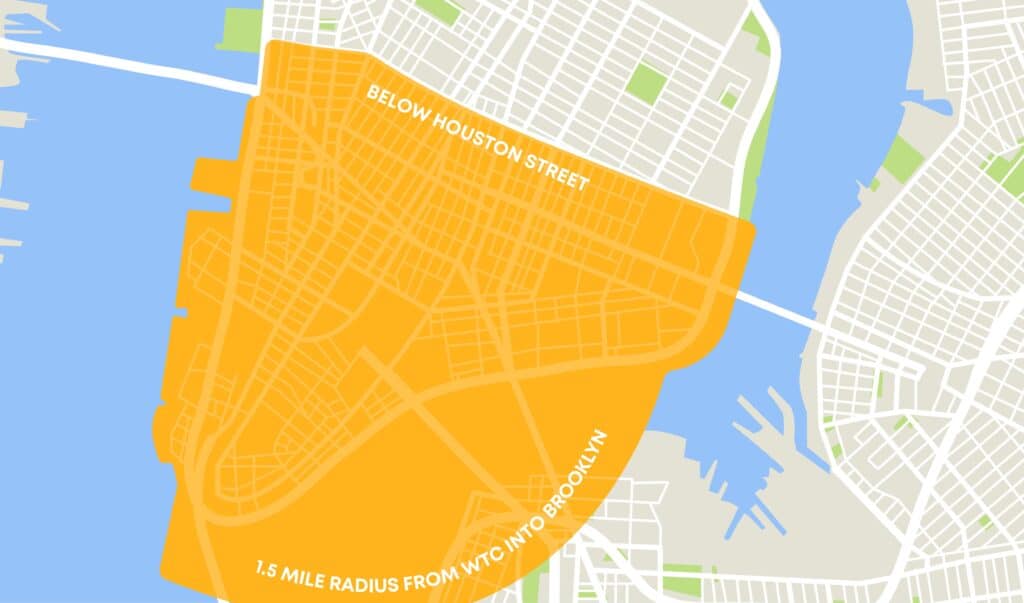
- Location of the work: The program covers the WTC site, the Fresh Kills Landfill in Staten Island, the New York City morgue, the temporary morgues on the piers on the west side of Manhattan, and the barges between the west side of Manhattan and Fresh Kills.
- Timing of the work: The eligible dates of service are September 11, 2001, through September 12, 2002.
Future workers’ compensation claims will be based largely upon:
- How the condition is linked to 9/11 exposure.
- How the illness has affected the ability to work.
Eligible workers still have time to protect their rights by registering for both NYS Workers’ Comp and the VCF. Doing so should be a priority.
To discuss your situation and learn more about how we may be able to help you, please call Weisfuse & Weisfuse, LLC at 212-983-3000 or contact us online to schedule a free consultation.
About Jason Weisfuse –
9/11 Victim Compensation Fund Attorney
About Jason Weisfuse –
9/11 Victim Compensation Fund Attorney
Jason E. Weisfuse is a seasoned 9/11 Victim Compensation Fund attorney and owner of Weisfuse & Weisfuse, LLC, a New York City-based law firm dedicated to representing individuals affected by the September 11th attacks. Since the establishment of the September 11th Victim Compensation Fund (VCF), Jason has been instrumental in assisting first responders, survivors, and families in securing the compensation and medical benefits they deserve. He will personally be submitting your claim and will be your primary contact throughout the process.
As a graduate of New York Law School (2009), Jason brings extensive experience regarding the 9/11 Victim Compensation Fund to his practice. His deep understanding of the VCF and the World Trade Center Health Program (WTCHP) has enabled him to navigate complex claims processes effectively, resulting in substantial awards for his clients.
Jason is a member of the New York State Trial Lawyers Association and the American Association for Justice and has been published in the New York Law Journal.
Get In Contact Today
If you are a current client, please email Jason at jw@weisfuse.com with your questions. All information provided is safe & confidential.
No phone/mobile number information will be shared with third parties/affiliates for marketing/promotional purposes. All the above categories exclude text messaging originator opt-in data and consent; this information will not be shared with any third parties.